EdTech — SaaS Learning
Saasguru
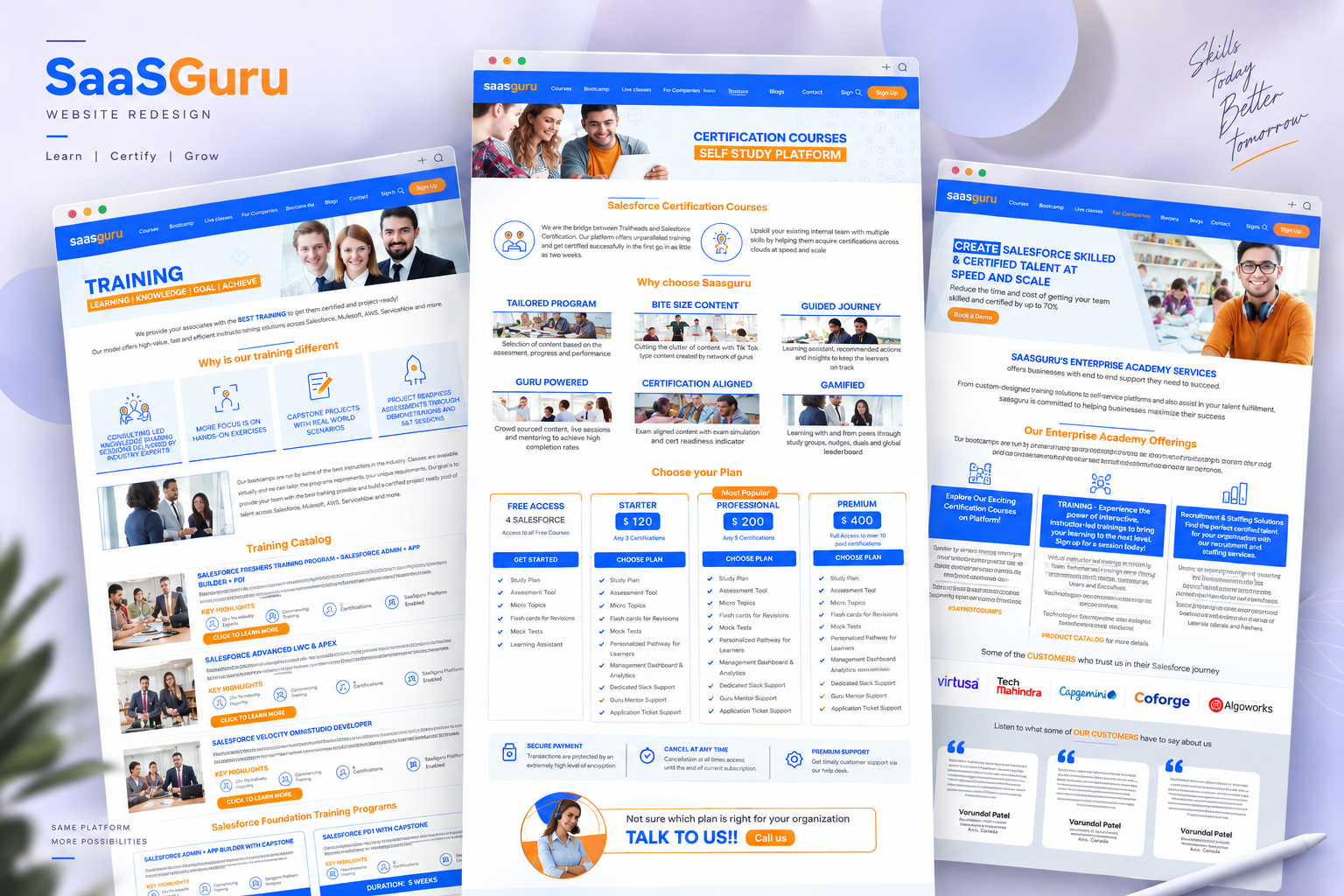
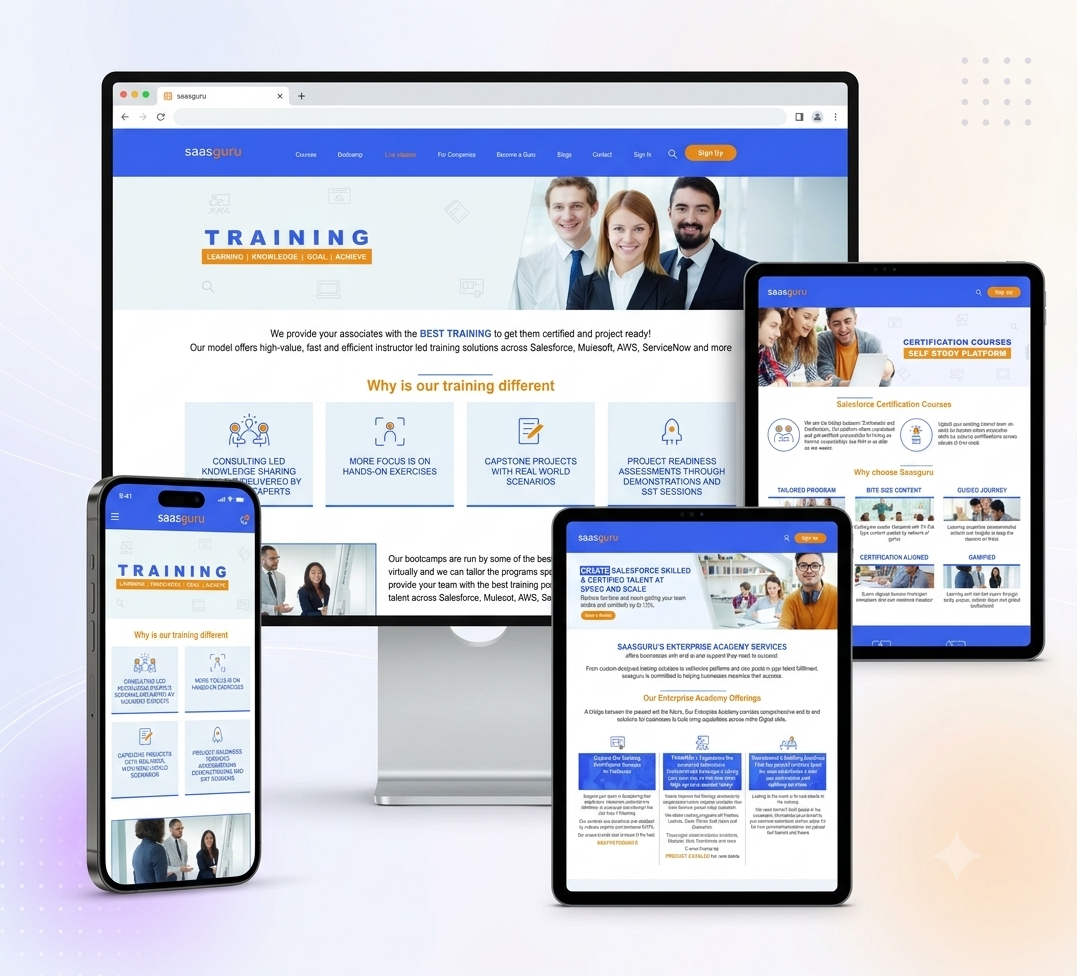
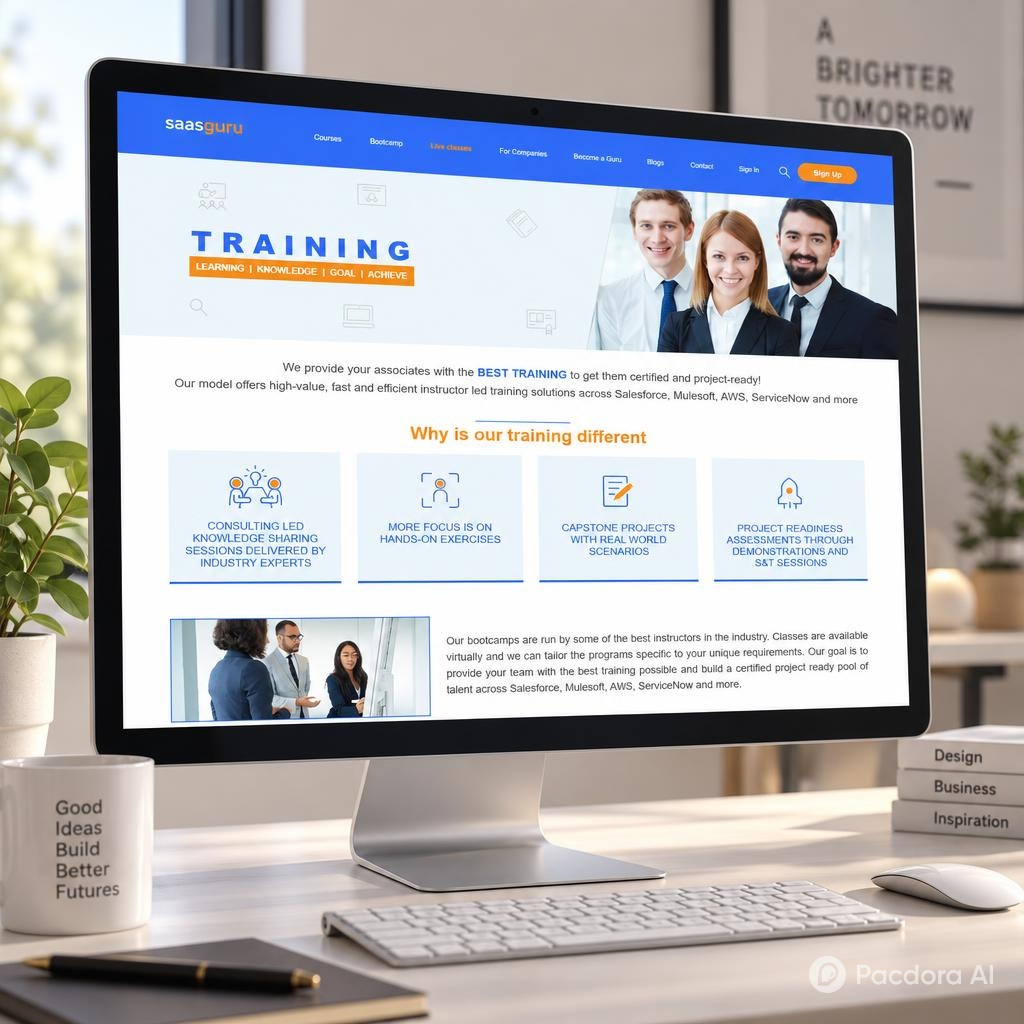
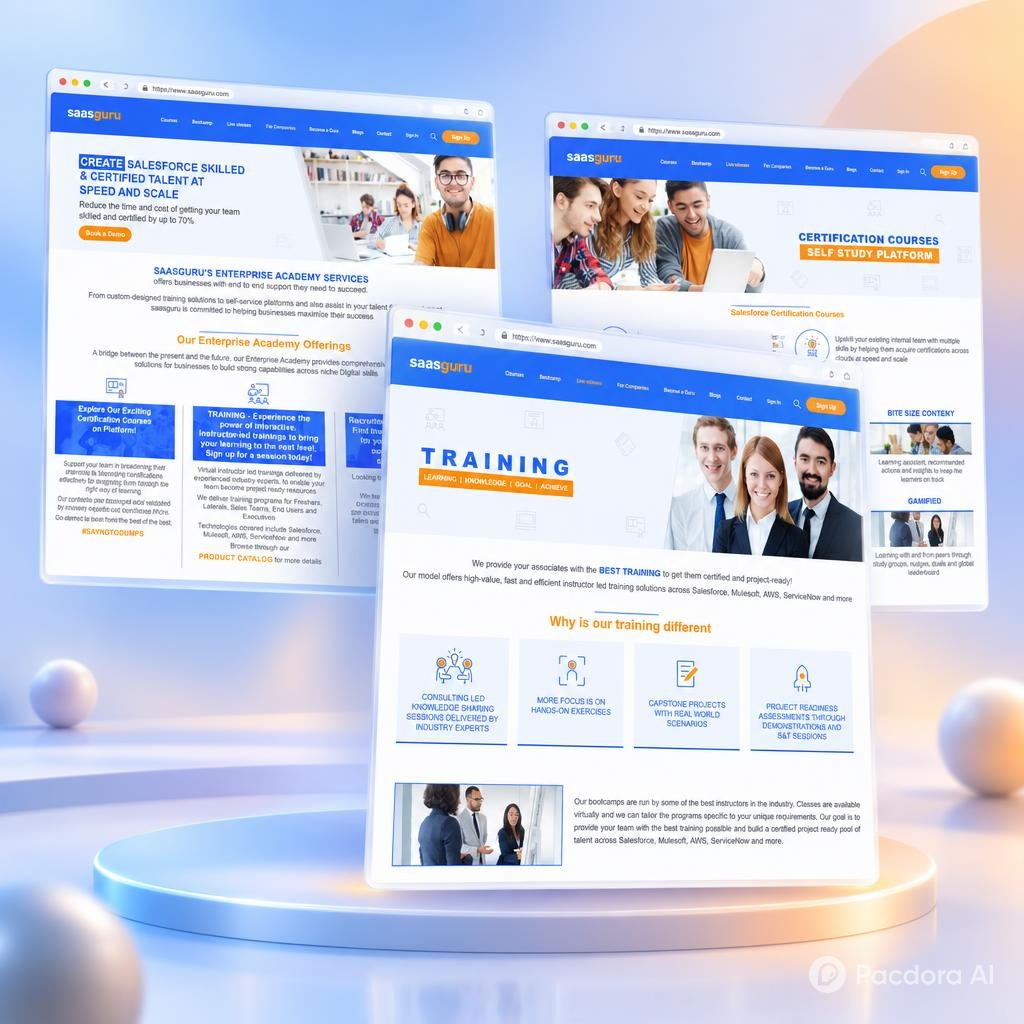
A focused learning dashboard that helps professionals upskill through structured, outcome-based SaaS training.
- Role
- UI Designer
- Duration
- 2 weeks
- Team
- Solo
- Status
- Delivered
Outcome summary
A clean, guided learning dashboard with skill tracks, progress visibility, and milestone-based certification prep.
01 — Problem context
What was broken
- The problem
- Professionals exploring SaaS careers often face scattered content, unclear progress, and no clear path from learning to job readiness.
- Who was affected
- Aspiring SaaS professionals, career mentors, and hiring managers.
- Why it mattered
- Clear learning pathways reduce dropout and improve confidence when transitioning into SaaS roles.
02 — History
History of the project
- Before the project
- Learners relied on scattered tutorials without structure or accountability.
- The trigger
- Demand for certified, job-ready SaaS talent outpaced accessible training paths.
- Background
- A concept project exploring how ed-tech can feel calm, credible, and career-focused.
03 — Geography
User and context
- Target user
- Working professionals and recent graduates exploring SaaS careers
- Age / role
- 22–40, early-career and mid-career switchers
- Environment
- Remote learning, mostly desktop and tablet use
- Device
- Laptop, tablet, and occasionally mobile
- Digital comfort
- Moderate — comfortable with web apps but need clear guidance
- Market context
- Global online SaaS skilling and certification platforms
- Where the problem happens
- Between curiosity about SaaS roles and confident job application
04 — Physics
Mechanics of the experience
- Main user journey
- Explore tracks → enroll → learn → practice → build portfolio → certify → apply.
- Top user tasks
- Browse skill tracks
- Track weekly progress
- Complete a capstone project
- Friction points
- Information overload, unclear prerequisites, and disconnected practice.
- Information architecture
- Home dashboard with active track, library, schedule, portfolio, and profile.
- Where users got stuck
- Choosing the right track and staying motivated between modules.
- What I simplified
- Curated tracks with estimated time, clear milestones, and visible next actions.
05 — Chemistry
Emotion and trust
- Feeling before
- Overwhelm and uncertainty about where to start.
- Fear or confusion
- Investing time in a course that does not lead to a job.
- Trust issue
- Credentials and alumni outcomes create confidence.
- Target emotion
- Clarity, momentum, and professional pride.
- How design supported it
- Friendly microcopy, progress celebrations, mentor availability, and a portfolio that proves skills.
06 — Biology
Behaviour
- Repeated behaviour
- Binge-watching videos without applying knowledge.
- Existing workaround
- Taking notes in separate documents and building ad-hoc portfolios.
- Habit loop
- Curiosity → research → enroll → lose momentum → switch platform.
- Behaviour to change
- Replace the loop with small, scheduled, project-backed learning sprints.
- Feedback loop created
- Weekly progress emails, badge unlocks, and peer project reviews.
07 — Mathematics
Proof and metrics
Research sample
To be validated — 8–12 target learners and 3–5 mentors or hiring managers.
Usability sample
To be validated — 5 users completing track enrollment and a module.
Task completion
Target: ≥80% module completion after enrollment.
Time saved
Target: 30–40% reduction in time spent searching for relevant materials.
Errors reduced
Target: ≤10% confusion on next-step navigation.
User confidence
Target: ≥4/5 confidence in readiness after finishing a track.
Strongest user quote
To be captured through user research. Focus on clarity, confidence, and career relevance.
Business / user impact
Designed to reduce friction in upskilling journeys and improve learner-to-role readiness.
Still to validate
Track selection behavior, sustained engagement, capstone completion, and hiring outcomes.
08 — Design engineering
How it was built
- 01Learner need-finding around career transitions
- 02Information architecture for track-based learning
- 03Dashboard wireframes with progress and schedule
- 04High-fidelity UI with warm, credible visuals
- 05Portfolio and capstone project flows
- 06Concept prototype for usability testing
09 — STAR story
Situation, task, action, result
Situation
The growing SaaS economy needs skilled talent, but learners struggle to find a structured, credible path from fundamentals to job-ready skills.
Task
Design a focused learning experience that surfaces clear skill tracks, measurable progress, and project-based proof of competence.
Action
Mapped learner journeys across awareness, enrollment, practice, and certification; designed a dashboard with track cards, progress rings, and a project portfolio section.
Result
A high-fidelity concept that balances motivation and clarity — learners can see where they are, what’s next, and how each module connects to real-world outcomes.
10 — Transformation
Before and after
Before
Scattered resources with no clear path or proof of skill.
After
A structured track with milestones, portfolio evidence, and certification readiness.
Transformation
From confusion to confident, market-ready skill building.
11 — Final screens
Screen gallery
12 — Learnings
What I took away
- What I learned
- Progress visibility is as important as content quality for learner retention.
- What I would improve
- Validate the capstone review flow with mentors and hiring managers.
- Future scope
- Explore AI-powered study recommendations and peer cohort features.
Want the thinking behind this work?
Resume: /__l5e/assets-v1/46a1be5c-d256-45fc-b026-b2685ed1fe32/Sajeesh_Resume.pdf · LinkedIn: https://www.linkedin.com/in/sajeesh-subramanian-b4047274/